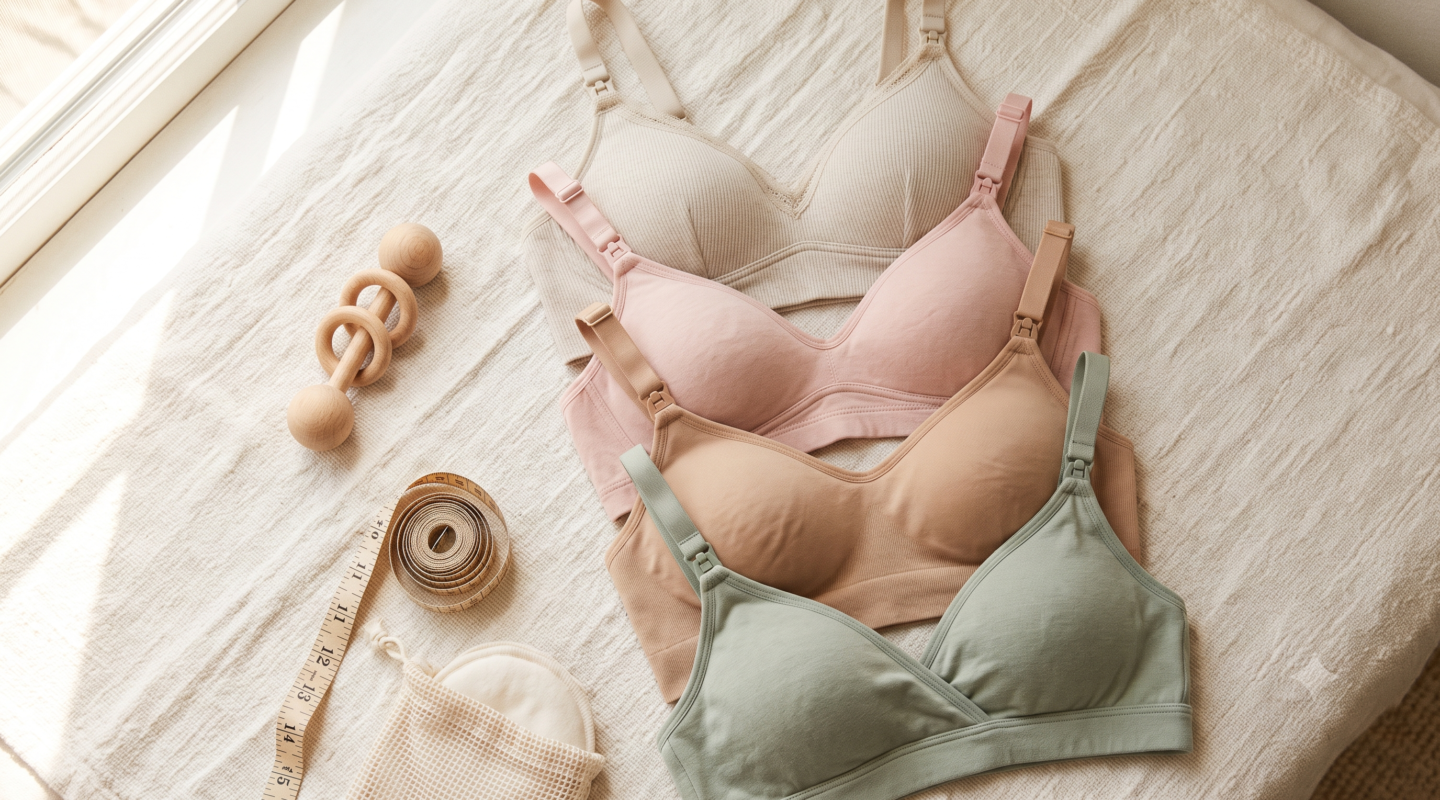
Finding the best maternity nursing bra is less about fashion and more about health, adaptability, and pure daily sanity. During pregnancy and postpartum, breast tissue undergoes dramatic changes in volume and weight. Standard underwires, rigid seams, and synthetic materials can cause uncomfortable pressure points, leading to blocked milk ducts or mastitis.
A well-designed maternity nursing bra provides dynamic support that adapts as your cup size shifts throughout the day. Whether you need one-handed clip access during middle-of-the-night feeds, hands-free pumping compatibility, or gentle, non-restrictive support for engorgement, choosing the right style ensures proper breast health and maximum comfort.
- What Is a Maternity Nursing Bra?
- Maternity Bra vs. Nursing Bra: Key Differences
- When Should You Start Wearing One?
- Types of Nursing Bras
- Wireless vs. Underwire Comparison
- Essential Features to Look For
- Fabric Comparison: Material Matters
- Fit and Sizing Guide Across Trimesters and Postpartum
- Common Mistakes When Buying Nursing Bras
- Top 5 Recommended Maternity Nursing Bras
- Frequently Asked Questions
- Final Verdict
What Is a Maternity Nursing Bra?
A maternity nursing bra is specialized intimate apparel designed to support breasts as they expand during pregnancy and accommodate nursing or pumping after delivery. Unlike conventional bras, these feature flexible waistbands, multi-hook back closures, 4-way stretch fabrics, and accessible cup panels.
Chest expansion during pregnancy happens in two ways: ribcage expansion caused by the hormone relaxin (adding 2–4 inches to the band) and glandular tissue growth (adding 1–4 cup sizes). Maternity nursing bras handle these structural shifts without digging in or constricting tender lymphatic tissue.
Maternity Bra vs. Nursing Bra: Key Differences
While often bundled together, maternity and nursing bras serve distinct functional primary purposes depending on where you are in your journey.
| Feature | Pure Maternity Bra | Pure Nursing Bra | Combination Maternity/Nursing Bra |
|---|---|---|---|
| Primary Purpose | Comfort during pregnancy expansion | Feeding/pumping access post-birth | Dynamic fit from 2nd trimester through weaning |
| Cup Access | Fixed cups (no drop-down access) | Drop-down clips, pull-aside, or pumping slots | Drop-down clips or pull-aside panels |
| Band Flexibility | 4–6 hook-and-eye options | 4–6 hook-and-eye options | 4–6 hook-and-eye options + band extenders |
| Best Used For | 1st and 2nd trimesters | Postpartum and lactation | Whole pregnancy through postpartum recovery |
When Should You Start Wearing One?
Timing your purchases prevents spending money on sizes that won’t fit during peak lactation.
-
First Trimester (Weeks 1–12): Early tenderness and ribcage bloating begin. Transition out of rigid underwires into soft, wireless maternity bralettes or stretchy crossover styles.
-
Late Second / Early Third Trimester (Weeks 28–32): Ribcage expansion peaks. This is the ideal window to purchase everyday seamless nursing bras, sizing to allow room in the cups for milk arrival.
-
Immediate Postpartum (Weeks 1–4): Milk comes in, causing temporary engorgement and size fluctuation. Stick to ultra-soft, clip-free sleep bras or crossover bralettes.
-
Established Lactation (Week 6+): Supply stabilizes, ribcage narrows back down, and breast size settles. This is the safest time to invest in structured, high-support everyday or pumping bras.
Types of Nursing Bras
1. Clip-Down Everyday Bras
-
Design: Features a latch clasp at the top of each cup attached to an inner sling. Unclipping drops the main cup panel down.
-
Best For: Daytime support, wearing under workwear or T-shirts, and full skin-to-skin contact during feeds.
2. Crossover / Pull-Aside Bralettes
-
Design: Front panels wrap over each other in a V-shape with no hardware or clips.
-
Best For: Nighttime feeding, early postpartum engorgement, and quick, low-fuss access.
3. All-in-One Nursing & Hands-Free Pumping Bras
-
Design: Dual-layered cups containing hidden internal openings to hold breast pump flanges securely alongside clip-down nursing panels.
-
Best For: Mothers who pump and nurse, wearable pump users, and back-to-work routines.
4. Nursing Sports Bras
-
Design: High-impact encapsulation or compression with clip-down or zipper nursing access and moisture-wicking fabrics.
-
Best For: Light exercise, walking, and active daily schedules without chest bouncing.
Wireless vs. Underwire Comparison
Lactation consultants (IBCLCs) almost universally recommend avoiding traditional rigid underwires during pregnancy and active nursing.
-
Rigid Metal Underwires: Apply concentrated pressure along the lower and outer breast tissue. When milk production fills the glands, this pressure can constrict milk ducts, triggering clogged ducts or painful mastitis.
-
Seamless & Flexi-Wire Alternatives: Modern high-support nursing bras use wide knitted under-bust bands, jelly-strip support technology, or flexible resin wires that bend with movement, maintaining shape without crushing milk ducts.
Essential Features to Look For
Prioritize these non-negotiable functional features when shopping:
-
True One-Handed Clip Operation: Test clasps to make sure you can easily release and fasten them using one hand while holding a infant with the other.
-
Inner Cup Slings: Look for an internal side or full-frame sling that maintains strap structure and gentle side support when the main cup panel is unclipped.
-
Extended Hook-and-Eye Rows: A minimum of 4 to 6 rows of clasps ensures the bra adapts as your ribcage expands during pregnancy and contracts postpartum.
-
Wide, Non-Slip Shoulder Straps: Distributes extra breast weight across the shoulders without digging into muscles or slipping off during movement.
-
Removable or Integrated Molded Padding: Prevents nursing pads from showing, provides modesty under light tops, and catches minor leaks.
Fabric Comparison: Material Matters
Hormonal changes during lactation increase body heat and skin sensitivity. The material touching your skin matters significantly.
| Material | Breathability | Moisture Wicking | Softness & Elasticity | Ideal Use Case |
|---|---|---|---|---|
| MicroModal / TENCEL™ | Exceptional | High | Ultra-soft, silky feel | Sensitive skin, sleep, early postpartum |
| Organic Cotton | Exceptional | Moderate | Soft, hypoallergenic | Sensitive skin, thrush prevention |
| Bamboo Viscose | High | Very High | Naturally cooling, antibacterial | Summer pregnancies, hot flashes |
| Nylon-Spandex Blends | Moderate | High | Superior 4-way stretch & recovery | Everyday high-support bras, sports bras |
Fit and Sizing Guide Across Trimesters and Postpartum
Finding the right size requires measuring differently than standard bra fitting.
Measuring Method
-
Band Size: Measure around your ribcage directly beneath your bust. Pull the tape snug but comfortable. If between numbers, round up.
-
Bust Size: Measure around the fullest part of your bust while wearing an unpadded bra.
-
Cup Size: Subtract the band measurement from the bust measurement (1 inch difference = A, 2 inches = B, 3 inches = C, etc.).
Sizing Rule of Thumb
-
Buying in Third Trimester for Postpartum Use: Fit the band on the lightest/outermost hook. As your ribcage contracts after birth, you will move inward to the tightest hooks. Ensure there is about one cup size of stretch room to accommodate initial milk supply arrival.
Common Mistakes When Buying Nursing Bras
-
Buying Wire Bras Too Early: Buying standard underwires in early pregnancy causes friction as your belly and ribcage push upward.
-
Purchasing Only One Style: Relying solely on structured daytime bras makes middle-of-the-night feeds uncomfortable. Keep a mix of everyday, sleep, and pumping options.
-
Ignoring Strap Width on Larger Busts: Narrow straps on D+ cups concentrate weight on the trapezius muscles, leading to neck and upper back fatigue.
-
Overlooking Pump Flange Compatibility: Buying simple nursing-only bras when you plan to pump forces you to change bras every time you express milk.
Top 5 Recommended Maternity Nursing Bras
These selections stand out based on verified material construction, lactation-safe design, customer durability feedback, and overall value.
1. Kindred Bravely Simply Sublime Nursing Bra

-
Best For: Best Overall Everyday Nursing Bra
-
Key Features: Wireless support, buttery-soft nylon-spandex blend, smooth clip-down access, removable padding, available in standard and Busty sizing.
-
Pros:
-
Exceptional shape retention without rigid wires
-
Busty sizing fits small ribcages with F+ cup needs effortlessly
-
Includes a complimentary band extender for late pregnancy expansion
-
-
Cons:
-
Thicker material can feel warm in high humidity
-
-
Why We Recommend It: It balances structure, soft comfort, and inclusive fit better than any other everyday bra, working seamlessly from the second trimester through weaning.
2. Bodily The Everything Bra
-
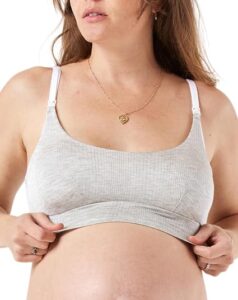
Best For: Best for Early Postpartum, Engorgement, and Sleep
-
Key Features: IBCLC-designed, clip-free pull-aside access, silky MicroModal construction, zero hardware or binding elastic.
-
Pros:
-
Applies zero restrictive pressure on milk glands during supply regulation
-
Incredibly gentle on tender, sensitive breast tissue
-
Easy pull-aside access makes night feeds effortless
-
-
Cons:
-
Low structural support for high-impact activities or large busts
-
-
Why We Recommend It: Designed specifically around lactation science, it is the safest and most comfortable bra to wear during the tender first weeks postpartum.
3. Larken X Nursing & Hands-Free Pumping Bra
-
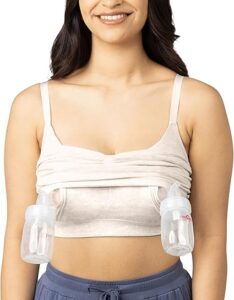
Best For: Best Hardware-Free Nursing & Pumping Hybrid
-
Key Features: Patent-pending crossover design, clip-free, elastic-free, holds pump flanges securely without snaps or zippers.
-
Pros:
-
Completely free of clips, snaps, and velcro that can scratch baby
-
Seamlessly transitions from nursing to hands-free pumping
-
Ultra-breathable Modal fabric blend
-
-
Cons:
-
Offers relaxed, light support best suited for lounging or low-impact wear
-
-
Why We Recommend It: Pumping bras often feel like medical harnesses. The Larken X eliminates all hard hardware while keeping pump flanges locked in place cleanly.
4. Momcozy Seamless Jelly Strip Nursing Bra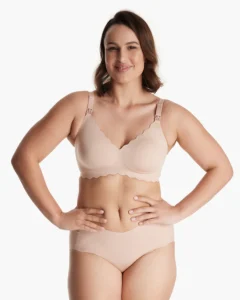
-
Best For: Best for Large Breasts Needing Lift Without Wires
-
Key Features: Integrated jelly-strip technology replacing traditional wire, wide side wings, 360-degree seamless stretch, OEKO-TEX certified.
-
Pros:
-
Jelly strips provide structural lift without pressing on milk ducts
-
Wide back band smooths sides and relieves shoulder pressure
-
Excellent coverage for full-bust shapes
-
-
Cons:
-
Higher coverage profile sits visible under deep V-neck tops
-
-
Why We Recommend It: It offers the visual shape and lift of an underwire bra while maintaining the safety and flexibility of a wireless design.
5. Auden Seamless Nursing Bra (Target)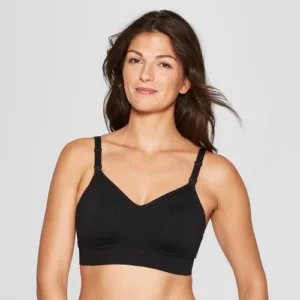
-
Best For: Best Budget Pick for Building a Rotation
-
Key Features: Affordable price point, seamless stretch fabric, easy drop-down clips, 6-hook back closure, removable pads.
-
Pros:
-
Budget-friendly price allows stocking up easily
-
Stretches comfortably across fluctuating cup sizes
-
6-hook back band gives excellent ribcage versatility
-
-
Cons:
-
Fabric shows minor wear faster after frequent hot washing
-
-
Why We Recommend It: A dependable, highly rated daily workhorse that proves you do not need to spend a fortune to get comfort and function.
Frequently Asked Questions
How many nursing bras do I actually need?
A practical rotation is three to five bras: one on your body, one in the wash, one in your drawer, and a couple of soft sleep/lounge options. Because milk leaks and spit-up happen frequently, having spares prevents constant emergency laundry.
Can wearing the wrong nursing bra cause mastitis?
Yes. Bras that are too tight, feature rigid underwires that dig into tissue, or lack sufficient cup depth can press on milk ducts. This pressure blocks milk flow, creating hard lumps that can progress into duct inflammation or mastitis.
Do I need a separate pumping bra if I already have a nursing bra?
If you plan to pump regularly, an all-in-one nursing and pumping bra or a dedicated clip-free pumping option like the Larken X saves significant time. Standard nursing drop-down cups cannot hold pump flanges in place hands-free.
Can I sleep in my nursing bra?
Yes, provided it is wireless, non-restrictive, and lacks rigid hardware. Soft crossover bralettes or sleep nursing bras keep nursing pads positioned overnight to absorb leaks without constricting lactating tissue.
Final Verdict
Choosing the right maternity nursing bra comes down to matching your current stage, bust size, and feeding plans:
-
For Everyday Wear & Support: The Kindred Bravely Simply Sublime is the top choice for overall comfort, structure, and sizing versatility.
-
For Hospital Bags & Early Postpartum: The Bodily The Everything Bra delivers unmatched gentle care during milk arrival and engorgement.
-
For Hands-Free Pumping & Nursing: The Larken X offers a clip-free design that simplifies dual feeding without hardware clutter.
-
For Lift on Larger Breasts: The Momcozy Jelly Strip Bra provides shape without risking blocked ducts.
-
For Value: The Auden Seamless Nursing Bra delivers core features at an accessible price point.