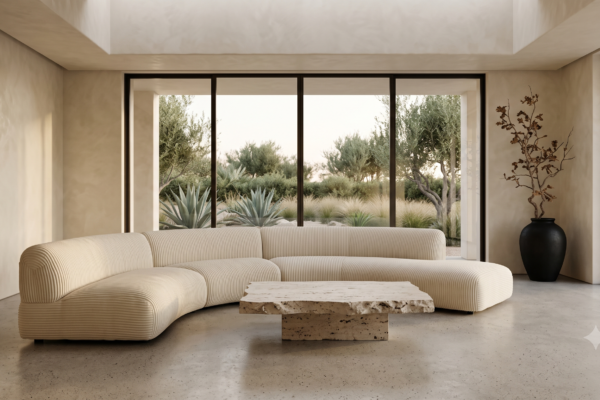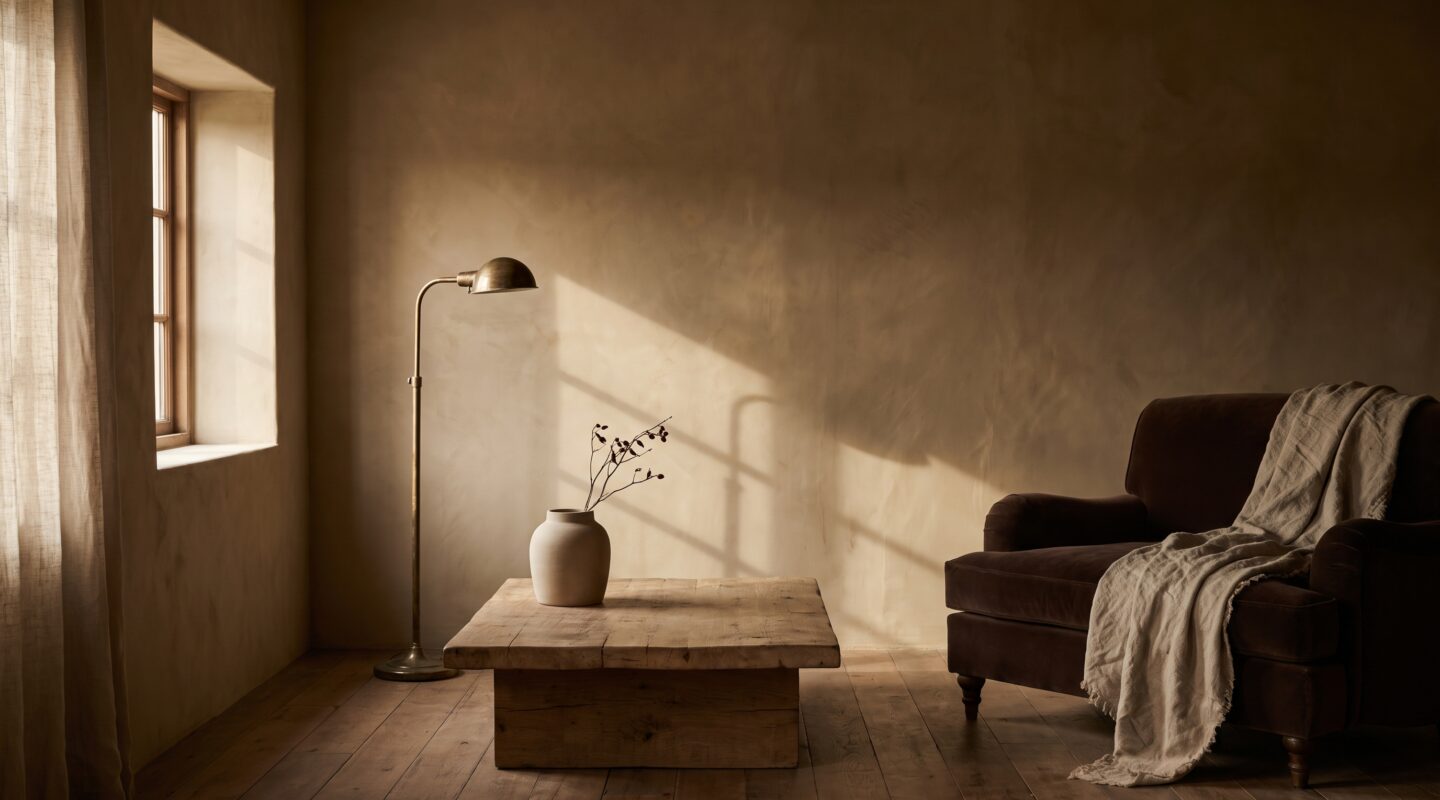
The crossing of the threshold into your home should register as a physical shift in the atmosphere. The hum of the street dissipates, the glare of the screen fades, and the nervous system lets out a long exhale. For years, the design industry insisted that achieving this peace required absolute erasure. We were sold the clinical “white box”—rooms stripped of warmth, devoid of shadow, and heavily reliant on pale ash and hospital-grade whites. It was an aesthetic of denial masquerading as peace, a visual trick that ignored how our bodies actually experience a room.
By the mid-2020s, collective fatigue with these sterile environments hit a breaking point. Stark white rooms did not soothe the mind; they demanded neurotic upkeep and offered zero tactile comfort against the barrage of modern digital life. Spaces felt less like homes and more like staging areas for a future that never arrived.
Now, the pendulum has swung toward a necessary evolution: Monastic Minimalism.
This isn’t a retreat into chaotic maximalism, nor is it clutter in disguise. Call it intelligent restraint. It is the intentional construction of a home as a physical antidote to urban chaos. It requires stepping out of the role of passive consumer and into that of a precise editor. By prioritizing visual weight, shadow, tactile resonance, and the unmistakable mark of the human hand, Monastic Minimalism builds spaces that feel unapologetically grounded.
The Evolution of Intelligent Restraint
The death knell for the clinical white box was sounded in architectural studios long before it hit retail floors. When industry forecasts for 2026 rolled out, the tone shifted noticeably from subtractive design to monastic warmth.
Subtractive minimalism cared only about what could be removed. It created rooms that looked striking in photo shoots but felt hostile to live in, operating on the flawed premise that emptiness equals peace. Monastic Minimalism focuses entirely on the integrity of what stays. It asks a different question: Does this object, texture, or tone deepen the silence of the room?
This movement borrows heavily from historical cloisters, Japanese temples, and centuries-old sanctuaries. In those spaces, every stone, exposed beam, and ceramic vessel served a purpose, yet nothing felt purely utilitarian. Luxury was measured in spatial volume, the manipulation of natural light, and the absence of noise.
A home built on these principles acts as a psychological buffer. When our working hours are defined by algorithms, constant pinging, and digital fatigue, the domestic space must demand nothing back. The monastic interior doesn’t shout for attention. It holds you in quiet, analog suspension.
A Grounding Vernacular: The 2026 Palette
If the previous decade was defined by icy greys and bleached woods, the current direction is anchored firmly in the earth. The era of the high-contrast white room has ended, replaced by tones that absorb light rather than reflect it.
The primary colors of Monastic Minimalism are deep, dense, and quiet. Rich chocolate browns, bistre, and raw umber form the foundation. Unlike pure black, which can feel harsh or void-like, a deep espresso or cacao creates an immediate sense of enclosure—it wraps around a space like an earthen shell.
These dark bases rely on supporting neutrals: unbleached parchment, wet clay, crushed limestone, and raw ecru. You rarely see these applied as flat latex paint. Monastic spaces lean on limewash, Roman clay, and tadelakt plaster. These finishes leave a breathing, mottled surface where shadows pool and shift as daylight moves across the room.
To keep these dark spaces from feeling heavy or subterranean, strategic metal accents are essential. Unlacquered brass and dark bronze are the primary choices. Unlike the high-shine, polished golds of past trends, unlacquered brass is a living finish. It tarnishes, marks, and records time. A heavy brass reading lamp against a dark plastered wall provides focused light while anchored quietly in the corner, reflecting ambient warmth without glinting.
The Sensory Imperative: Tactility as Therapy
When most of our daily physical interaction consists of swiping smooth glass, our nervous systems end up starved for texture. Neuroaesthetics—the study of how the brain responds to physical environment—confirms that surface variation alters stress levels. The monastic room addresses this deficit through material friction and mass. Visual impact becomes secondary to how a piece feels under hand.
The Friction of the Natural World
Warm minimalism leans on surfaces that don’t hide their origins. Matte, unglazed porcelain and heavy stoneware have largely pushed out high-gloss ceramics. Touch an unglazed vase, and you feel a dry, fine resistance that pulls your focus back to the physical room. Used as independent forms or holding a single dry branch, these pieces carry an old, durable quality.
Upholstery follows the same trajectory. The focus has moved away from smooth, synthetic blends toward heavy, raw Belgian linen. It has texture, slight slubs, and a firmness that softens only with real use. Layered against hand-knotted wool, wide-plank oak floors, and slubbed raw silk drapery, the room relies on material contrast rather than pattern to create depth.
Softness, Shadow, and Wearable Architecture
Against these dry, structural surfaces, a room needs moments of yield. High-pile mohair and deep velvet—in moss green, rusted charcoal, or dark plum—are used sparingly. Placed on a single deep chair or floor cushion, velvet absorbs sound and deepens shadows, changing tone as you move around it.
This approach naturally extends to what we wear at home. The line between interior spaces and personal clothing has blurred; living in a stripped-back environment feels off-balance if you’re wearing synthetic loungewear. Heavy cashmere wraps, sand-washed silk sets, and thick organic wool knits mirror the room’s materials. They act as wearable architecture, keeping you connected to the textures of the space.
The Craft Renaissance & The Ethos of Slow Luxury
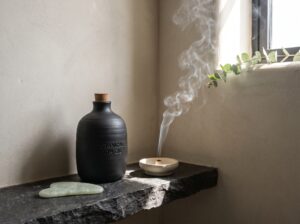
You cannot mass-produce a soul, and that reality has turned attention toward small workshops and manual craft. Luxury is rarely measured now by a recognizable silhouette or a brand mark. It shows up in the slight wobble of a hand-thrown lip, natural dye variations, or the weight of a stool carved from a single timber block.
Slow luxury accepts that good work takes time, skill, and patience. Curating a home this way means acting more like a patron than a shopper. A heavy, hand-formed incense burner made from volcanic clay doesn’t just scent a room; it provides a visual anchor for the table it sits on. Heavy ceramic lamps built by hand carry a physical presence that light plastic reproductions can’t replicate. Their value sits in their quietness and their ability to age without falling apart.
The Liturgy of Slow Beauty
This focus on material weight reaches into personal care routines. The basic notion of a “skincare routine” has shifted toward deliberate, slow beauty rituals, turning the bathroom into an extensions of the living space.
Single-use plastic bottles feel out of place here. They’ve been replaced by small-batch oils in heavy ceramic or dark glass jars. The tools themselves—hand-carved stone gua sha boards, solid brass razors, or dry brushes with walnut handles—carry real mass.
Using tools like these changes the rhythm of a morning or evening. The weight of a glass dropper bottle, the scent of unrefined botanical resins, and the cool surface of carved stone pull your focus away from screens and back into the room.
The Demise of Disposable Decor
Monastic Minimalism is practical about sustainability. It rejects flat-pack furniture built to last two years before ending up on a curb. Embracing this style means learning to wait—saving for one solid table or chair rather than filling an apartment with temporary pieces that lack character.
A Paradigm Shift: 2020s vs. 2026 Minimalism
| Feature | Early 2020s Clinical Minimalism | 2026 Monastic Minimalism |
|---|---|---|
| Color Palette | Stark white, cool grey, pale ash | Cacao brown, wet clay, warm parchment, umber |
| Wall Finishes | Flat matte latex paint | Limewash, Roman clay, textured tadelakt |
| Primary Texture | Smooth, high-gloss, synthetic blends | Raw linen, unglazed porcelain, heavy wool, velvet |
| Lighting Strategy | Bright overhead LEDs, recessed cans | Low-level ambient, directional sconces, deep shadow |
| Sourcing Ethos | Fast furniture, trendy mass production | Artisanal, slow luxury, hand-carved, reclaimed |
| Core Mood | Sterile, gallery-like, high-maintenance | Earthen, quiet, grounded, tactile |
Expert Tips: Curatorial Practices for Your Sanctuary
-
Maintain Tactile Contrast
A room filled only with soft items feels limp; a room made entirely of hard surfaces feels like an office. Monastic spaces depend on contrast. If your sofa is wrapped in soft, light-absorbing velvet, pair it with a dry, unpolished travertine side table. If you’re wearing soft silk, toss a heavy, coarse wool throw over the chair.
-
Treat Scent as Architecture
Scent alters how big or cold a room feels. Synthetic room sprays often smell sharp and chemical. Look for stone or brass burners and burn raw woods, frankincense, or hinoki. These deeper scents settle a room and mark a clear break from the outside world.
-
Pay Attention to Object Weight
Take stock of the items you handle every day and upgrade their weight where it makes sense. Swap flimsy plastic dispensers for heavy stone or glass pumps. Switch light, factory-made glassware for thick, hand-blown tumblers. Physical weight forces you to slow down your movements, making everyday actions feel intentional.
-
Edit for Character, Not Emptiness
Don’t clear off every surface just to leave it bare—that brings back the sterile white box. Remove pieces that look cheap or drain the room’s energy, but keep objects that hold weight: an old book with deckled edges, a brass weight taking on a dark patina, a heavy hand-thrown bowl for keys. What remains should feel permanent.
-
Soften Room Acoustics
Hard surfaces bounce sound around, creating a subtle background noise that raises stress levels. Soften the room using floor-to-ceiling drapery, thick wool rugs over hard floors, or upholstered panels. Cutting down echo gives the space a quiet, protected feel.
-
Keep Screen Space Secondary
A black TV screen can easily become the focal point of a room. Keep technology secondary to the space. Use frame-style displays that run neutral artwork, hide routers inside woven boxes, or set up cabinets that close over screens when they aren’t in use.
Frequently Asked Questions
What separates traditional minimalism from Monastic Minimalism?
Popular minimalism from the past decade focused on removal—getting rid of items until a space was almost empty, which often resulted in cold, stark rooms. Monastic Minimalism focuses on atmosphere and physical texture. It uses dark earth tones, heavy materials, and controlled shadows to make a home feel protective and enclosed.
Does Monastic Minimalism require owning very few possessions?
No. It requires careful selection rather than extreme self-denial. The point is to keep fewer, better things. Instead of buying five cheap vases, you might pick one heavy, hand-thrown ceramic piece. Functional items, good textiles, and well-made furniture are central to the style.
How do you transition a bright or cluttered space into this style?
Start by clearing out temporary, trend-driven decor to quiet the room visually. Address the lighting next: turn off harsh ceiling fixtures and add lamps with warm bulbs to create pools of light and dark corners. From there, swap bright, synthetic fabrics for warm, textured neutrals like raw linen or heavy wool.
Is Monastic Minimalism expensive to set up?
Handmade and natural materials carry higher upfront costs than mass-market goods, but the mindset reduces overall buying. Because you need fewer items, your budget goes further on individual pieces. The foundational changes—decluttering, painting with warm earthen tones, and adjusting lighting—are relatively low-cost.
Why is “Slow Luxury” tied so closely to this look?
Both movements push back against fast, disposable manufacturing. Slow luxury values the time, manual labor, and skill needed to make an object. In a quiet, stripped-back room where every piece stands out, handcrafted items bring necessary texture and human presence.
Conclusion: The Final Polish
Designing a home around Monastic Minimalism is a quiet rejection of constant noise. By focusing on earthen colors, natural material friction, and well-made objects, you create something more enduring than an updated interior—you build a functional retreat.
When your home, daily routines, and everyday objects share this focus on quality and weight, the space settles into a steady, comfortable rhythm. Moving away from the stark austerity of the white box leaves room for something better: a home that feels rich, quiet, and built for real life.